
Rare Kidney-Liver Paired Exchange Performed at Keck Medicine of USC

A complex living-donor paired exchange helped one set of siblings save another. Learn how this unique case involved tight collaboration — and trust — between the kidney and liver transplant teams of the USC Transplant Institute.
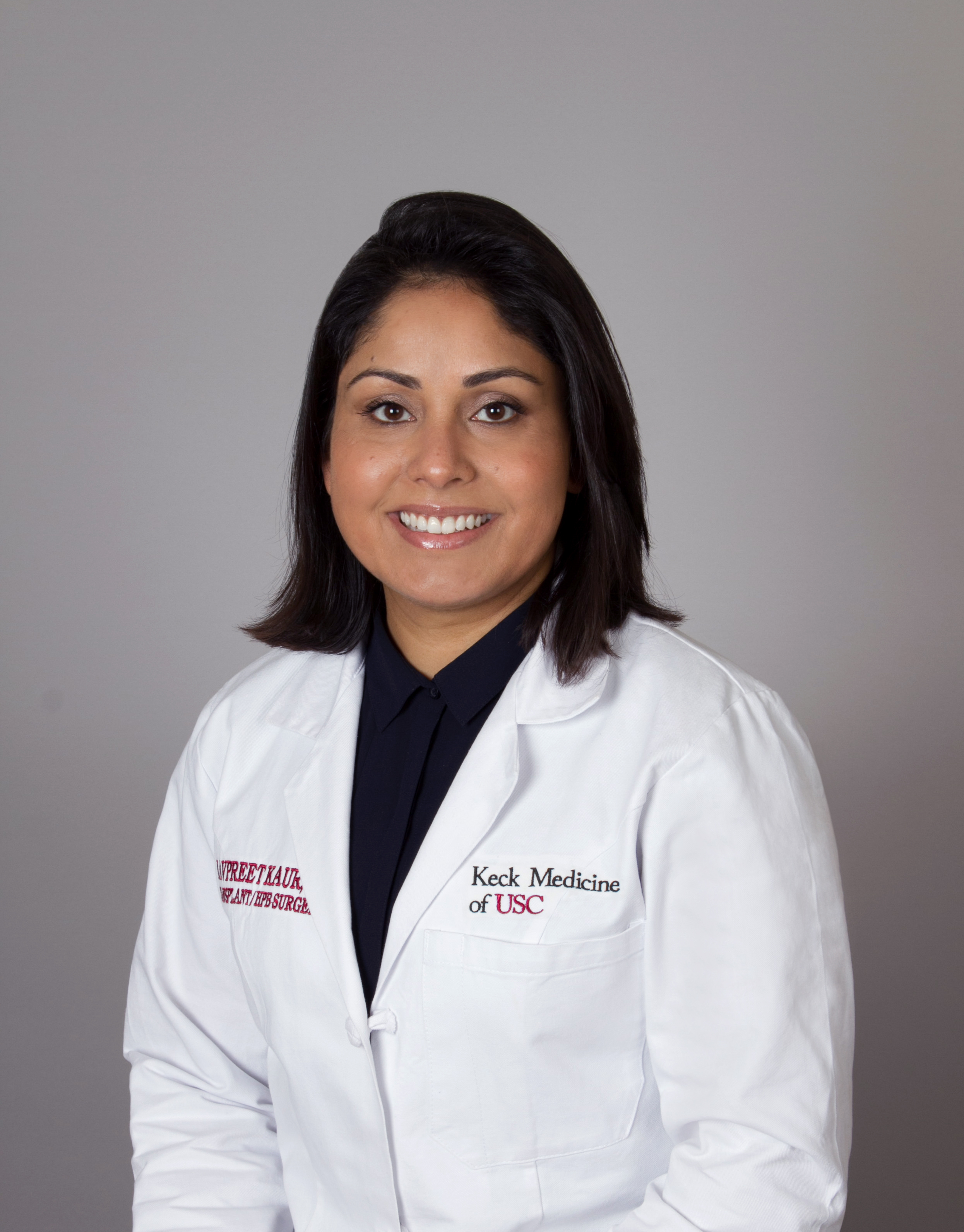
Navpreet Kaur, MD
A rare living-donor transplant exchange performed by the experts of Keck Medicine of USC allowed one set of siblings to save the other.
One patient, 28 years old, was born with biliary atresia. Her 21-year-old brother offered to donate part of his liver, but their organs were incompatible.
The other patient, 39 years old, had failing kidneys. Although his 28-year-old sister volunteered as a donor, she wasn’t a match for him.
The two families had never met, but after both were referred to Keck Medicine of USC for treatment, tests revealed a paired exchange was possible.
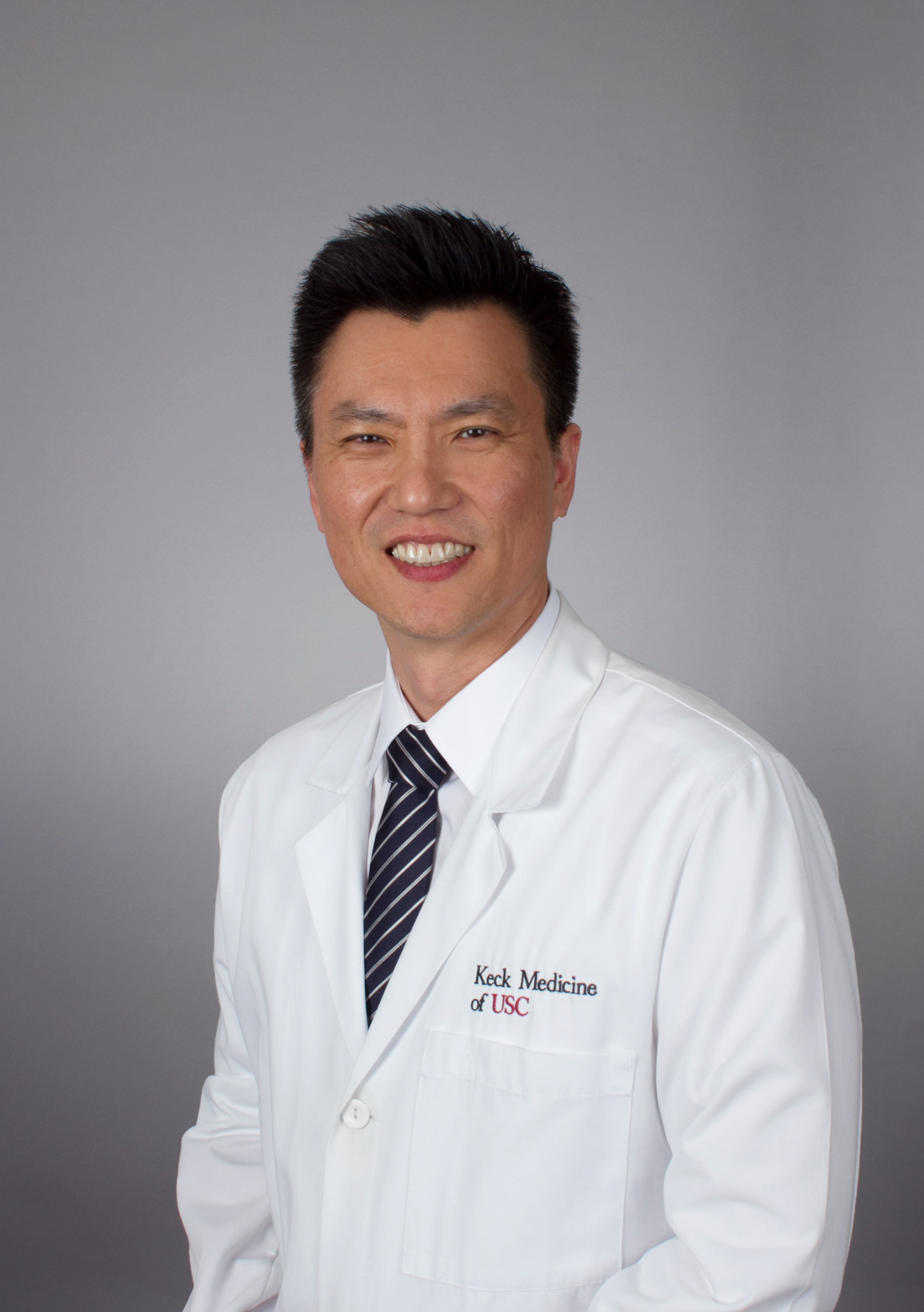
Jim Kim, MD
As a pioneer in living-liver donation, and with a robust living-donor kidney transplant program, the USC Transplant Institute, part of Keck Medicine of USC, was uniquely qualified to perform such a complex living-donor exchange. (The USC Transplant Institute also provides advanced heart, liver and lung transplant care and complex hepatobiliary care to patients living in Southern Nevada at its state-of-the-art facility Keck Medicine of USC – Las Vegas.)
Achieving the unique kidney-liver paired exchange involved tight collaboration between many experts of the USC Transplant Institute. Specialists from the USC Kidney Transplant Program and the USC Liver Transplant and Comprehensive Liver Disease Care Center explain how the strategy evolved.
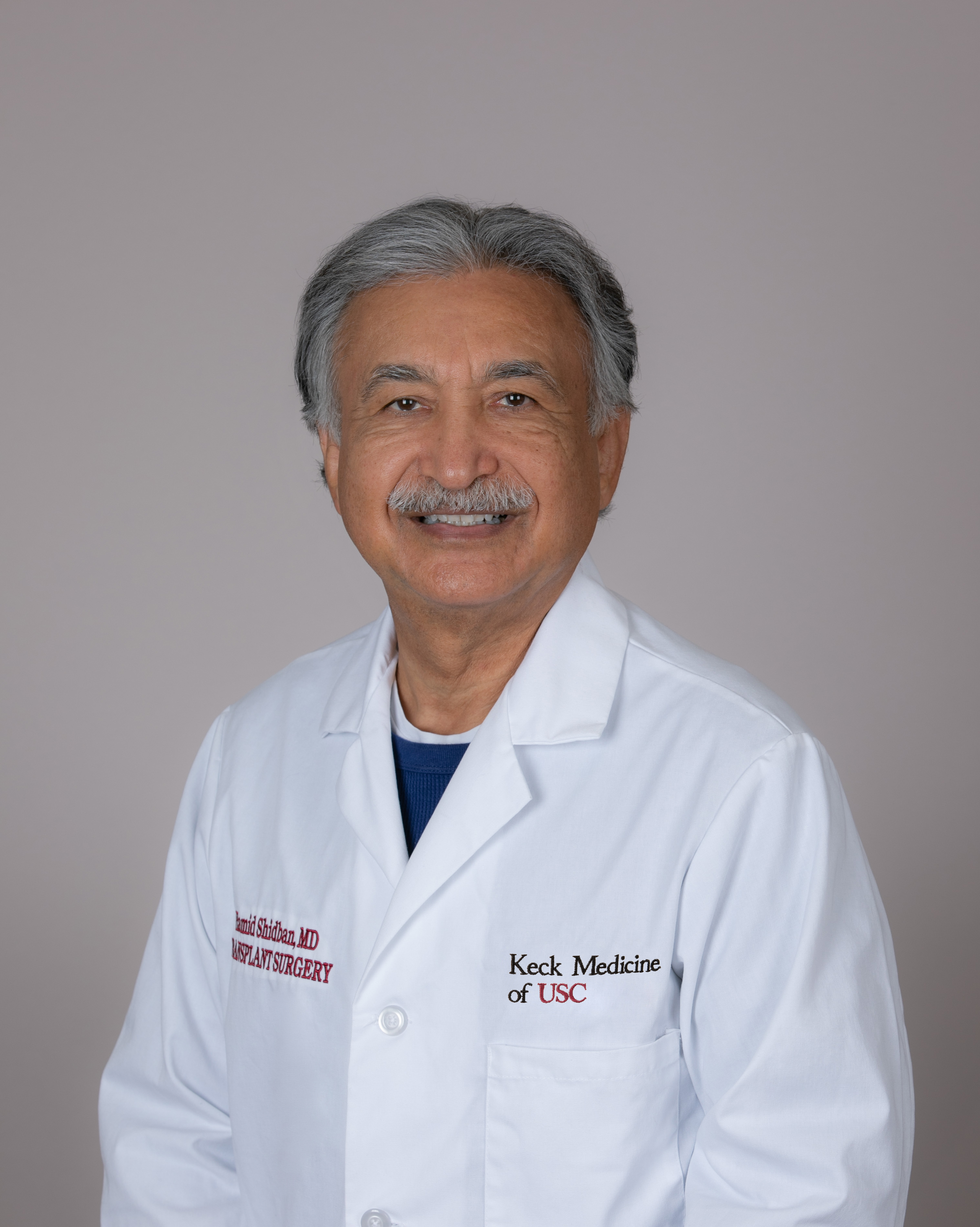
Hamid Shidban, MD
An uncommon exchange
Navpreet Kaur, MD, surgical director for the USC Living-Donor Liver Program at the USC Transplant Institute, was the one who determined in July 2023 that an exchange between the two sets of siblings could be done.
She explains that finding candidates for paired exchanges involves close coordination between the kidney and liver transplant teams.
“We have to think about patient anatomy and the size of the organ, because if you choose an organ from a larger donor and try to put it in a smaller person, you’ll run into problems,” Kaur explains.
Jim Kim, MD, director of kidney and pancreas transplantation at Keck Medicine of USC, says that while paired-exchange kidney transplants are becoming more common, paired liver exchanges are exceedingly rare — let alone paired donation between different organs.
“It’s rare to find two people who are both willing and able to donate a different organ than they originally intended,” Kim says.
“In this case,” Kaur says, “a female-to-female liver transplant and a male-to-male kidney transplant was a perfect fit. Since the donors already had workups completed, we were able to match them quickly.”
The challenge of making a match
Organ transplants are complex, even when the transplant involves the same type of organ. When different types of organs are involved, the difficulties increase.
“Finding an immunologically compatible donor can prove to be challenging in living-donor kidney transplants,” Kim says. “Finding a liver donor with normal kidney anatomy and who was also simultaneously the right immunologic match was truly remarkable.”
In liver transplantation, finding the right combination of blood type and anatomy can be challenging, especially since living liver donor surgeries are still limited. Even as one of the top five living liver donor programs in the nation, the USC Transplant Institute only performs about 30 of these surgeries per year.
The physicians credit their coordination teams with guiding the four patients through this unique situation. It’s a testament to the emotional support these care teams provide that ensures all patients understand and feel good about the process.
Kidney and liver transplant surgery
The surgeries were set for August 31, 2023, at Keck Hospital of USC.
In addition to Kim, the surgical team included transplant surgeon Hamid Shidban, MD, who operated on the kidney recipient. Kaur focused on the liver donor.
The procedures were coordinated on a precise schedule, with four operating rooms running simultaneously. According to Kaur, the experience of the USC Transplant Institute’s support teams in managing multiple daily surgeries proved beneficial.
“We have been doing living donor–related transplantation for 25 years,” Kaur says. “Our operating rooms understand our needs, and they are very good at accommodating several patients at once.”
The exchange also required immense trust between the four surgical teams. “It was a total team effort,” Kim says. “From our transplant coordinators and nurses to our anesthesia colleagues caring for these four individuals before, during and after surgery, this case showcases the best that Keck Medicine has to offer.”
Sweeping success
Ultimately, all four surgeries were a success. Their doctors say all four patients can expect to live healthy lives. “They’re all young people,” Kaur says. “I’m glad they can all move on and start a new chapter.”
“There are far more people in need of organ transplants than there are available organs,” Kim says. “Living donation helps bridge the gap, and this type of bi-organ paired exchange can open up even more opportunities for those in need.”
USC Transplant Institute
At the USC Transplant Institute, our experts provide comprehensive, personalized care for transplant patients and living organ donors. The USC Transplant Institute also provides advanced heart, liver and lung transplant care and complex hepatobiliary care to patients living in Southern Nevada at its state-of-the-art facility Keck Medicine of USC – Las Vegas.
Visit our Provider Portal today to refer a patient.